
Astrology applications are now in trend. Beyond just apps, the digital, spiritual, and horoscope market is expected to reach $22 billion by 2031. Unfortunetly, most of the astrology apps never get the traction they deserve. You know, what is the reason behind it? They just copy features, follow trends, and end up with little more than a horoscope wheel and generic predictions. These features are fine for casual use, but they are unable to create long-lasting business value.
So, what is missing? The answer is a clear strategy for astrology app development to create an app like Astro that helps you achieve popularity and ROI in 2026. And the surprising thing is, we have prepared this guide as a founder’s roadmap for creating, launching, and scaling an astrology app like Astra in 2026. From idea validation and MVP development to monetization and user retention, every step is designed for real-world success, especially if you are building for the USA market.
What Do You Mean By An Astrology App?
An astrology app is a digital platform or software that provides personalized astrological and horoscope insights based on a person's birth details, planetary positions, and behavioral patterns. These apps also help users to find planetary and daily or monthly horoscopes, compatibility reports, and life guidance with an intuitive user experience.
Modern astrology apps no longer focus only on zodiac signs. These advanced kundli apps integrate AI, advanced data analytics and visualization, real-time planetary tracking, and wellness-driven content. The AI-driven astrology apps offer precise horoscope results that feel less like fortune-telling and more like a daily self-reflection tool to enhance user engagement.
Read More: How to Build AI Agents From Scratch? Step-By-Step Guide
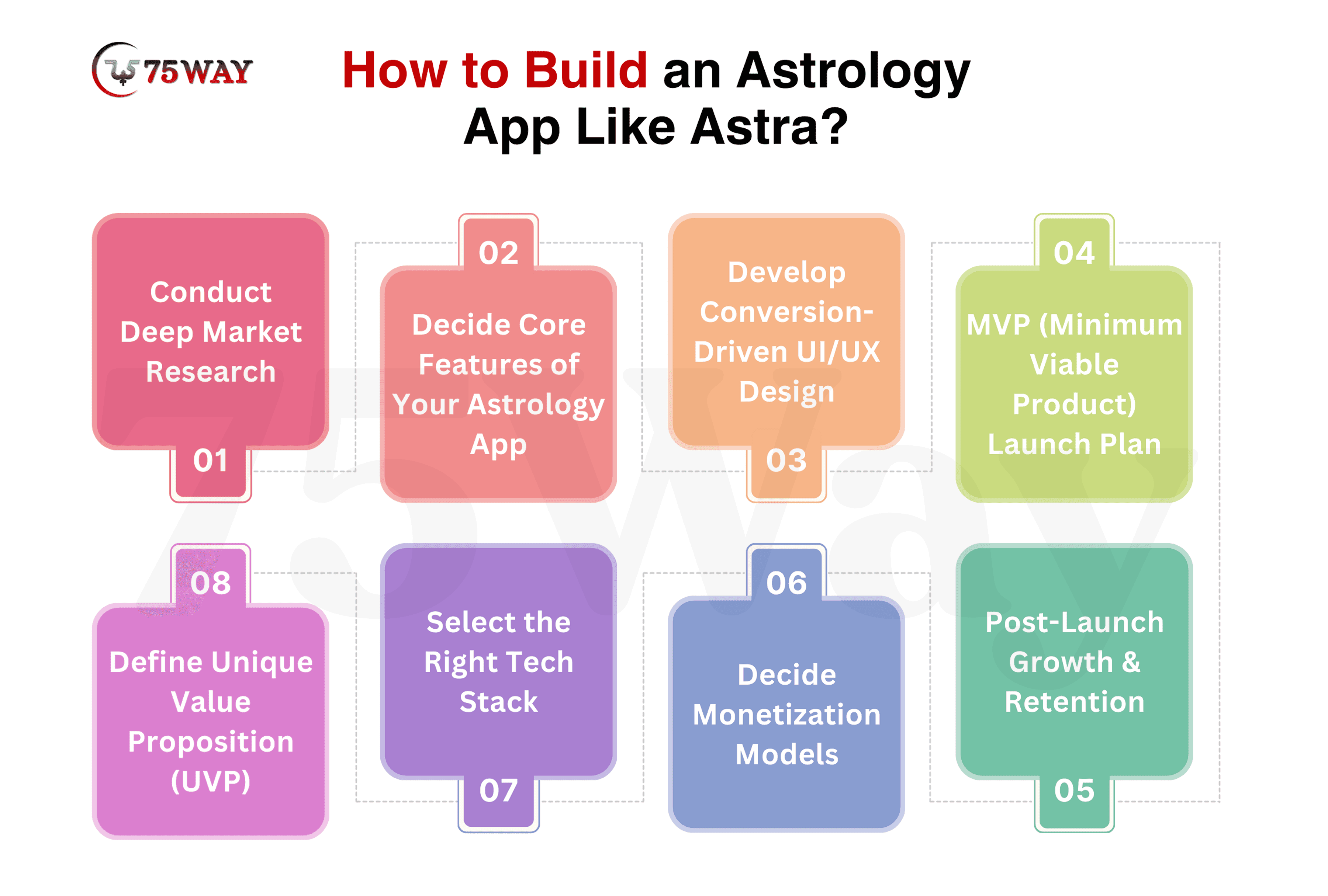
Step-by-Step Roadmap to Build an Astrology App Like Astra
The process of building an astrology mobile app like Astra is not just about writing code or choosing a tech stack. It requires a complete methodology, from market research and ideation to tech stack selection and development, all aligned from day one. Here, we elaborate on a comprehensive roadmap for creating a horoscope app like Astra, so that founders understand what needs attention first, what can wait, and where most apps usually go wrong. Each step below explains not only what to do, but also why it matters for long-term growth, user trust, and scalability in the US market.
Step 1: Conduct Deep Market Research
A strong foundation depends on a deep understanding of the market, users, and competition. A focused research phase highlights where demand already exists and where unmet needs still create opportunity. This stage reduces uncertainty and provides steady progress across planning, design, and launch stages. The subsequent stages benefit from this knowledge to align user expectations, product direction, and long-term business goals.
Market Analysis: The astrology app market continues to grow within the wider wellness and self-care space. User demand in the United States favors mobile-first experiences, personal insights, and daily interaction, which offer long-term engagement rather than shorter interest. This pattern points toward sustainable growth potential for well-positioned products.
Competitor Audit: A detailed competitor audit reveals meaningful patterns across features, pricing approaches, and experience design. Platforms such as Astra and Co Star emphasize AI-powered personalization and minimal layouts, whereas others highlight community features or therapist-style guidance. These contrasts reveal opportunities for improvement beyond simply launching similar apps.
User Pain Points: Several existing astrology apps suffer from repetitive content, surface-level explanations, and limited personalization depth. However, the reality is that users often disengage when results feel generic or disconnected from real life, which reduces trust and long-term usage. So, you must address relevance, and emotional connection becomes essential for differentiation.
Target Niches: The last step of this stage is to identify the specific niches, such as AI-driven predictions, dream interpretation, and compatibility analytics attract highly engaged audiences. These segments demonstrate stronger retention and higher willingness to pay, especially within the United States market. While developing an astrology app like Astra, you must focus on these areas to enhance user engagement and revenue growth.
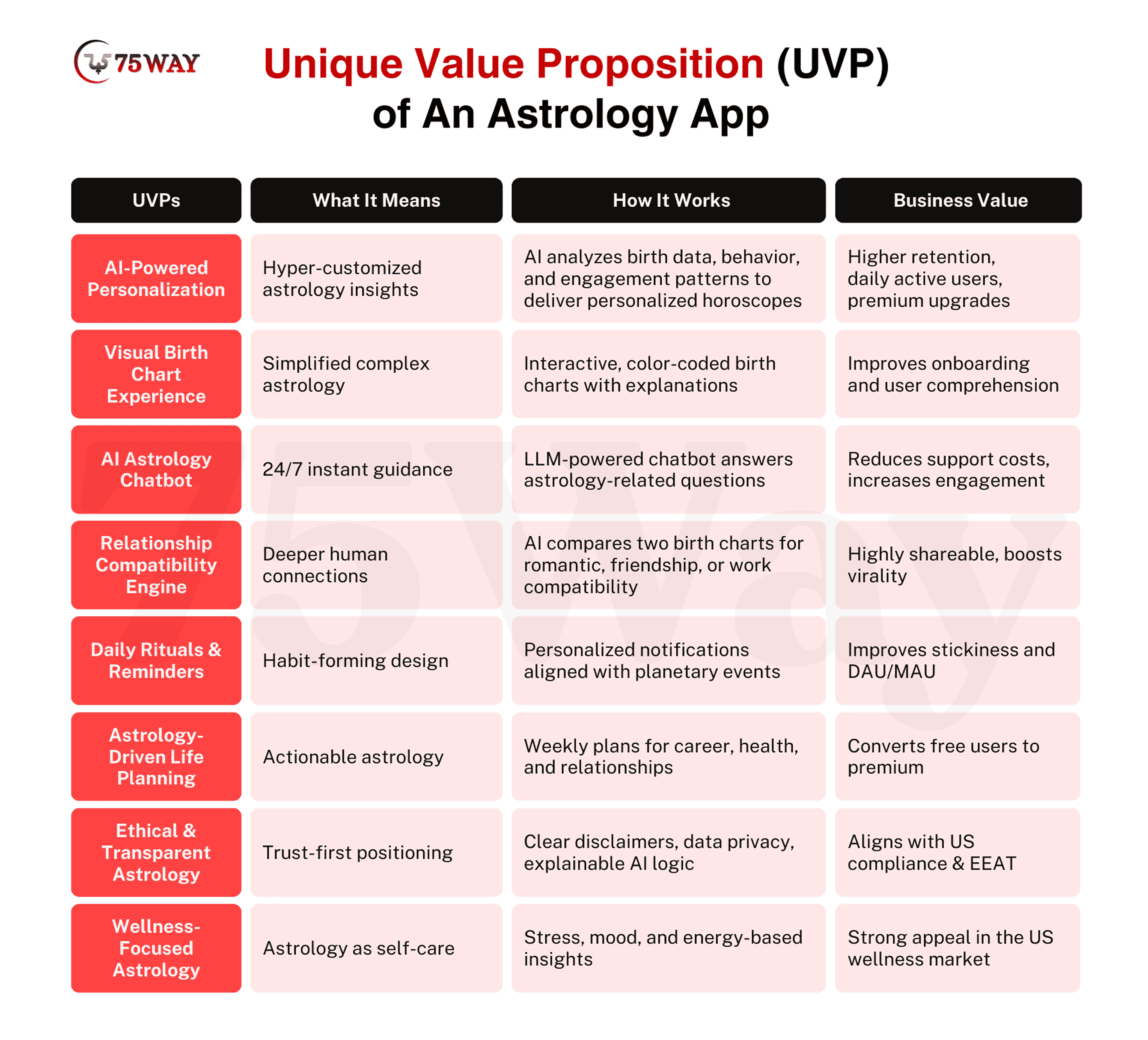
Step 2: Define Unique Value Proposition (UVP)
A unique value proposition (UVP) in an astrology mobile app development explains why users choose one astrology app among many similar options. Strong differentiation builds trust, drives downloads, and supports long-term retention across competitive markets. An astrology app without a focused UVP fades into crowded listings and weak engagement. Thus, a strong UVP is required to connect astrology apps to real-life decisions and emotional wellness, and personal guidance.
In astrology app development, a UVP describes the superior benefit offered to a specific niche, such as career-focused users, couples, beginners, or Vedic astrology followers. This proposition addresses pain points like vague predictions through AI-driven interpretations, expert astrologer access, or design. Here are some steps to select UVP.
Study User Behavior: You must identify real needs, confusion points, and expectations that influence adoption, trust, and emotional connection with astrology applications.
Analyze Competitors: Review competing apps to uncover missing value areas, weak personalization, and limited practical guidance across user journeys.
Define Unique Feature: Highlight actionable benefits that separate the app from generic horoscopes and connect astrology insights with daily life decisions.
Create Value Statement: Describe a concise message that communicates user benefit directly, supporting downloads, trust, and long-term retention growth.
Step 3: Decide Core Features of Your Astrology App
Core feature selection during the development of an astrology app defines the value users will experience from the very first interaction of your horoscope app. A thoughtful balance between essential and advanced features provides engagement, builds trust, and prevents new users from feeling overwhelmed. Each feature should connect naturally to the next to create a smooth and meaningful user journey.
Profile & Birth Details: User profiles capture birth date, time, and location as the foundation of personalized astrology experiences. This information enables accurate chart creation, which supports every insight delivered across the app.
Daily, Weekly, and Monthly Horoscopes: Time-based horoscopes encourage regular astrology app usage and help users build consistent habits. These recurring insights strengthen engagement and maintain an ongoing connection between users and the platform.
Compatibility Checker: You can add relationship analysis models in your Astra-like astrology app development to increase emotional relevance to astrology apps. This feature encourages sharing, discussion, and deeper personal interest, which naturally increases user interaction and retention.
Push Notifications: While building a horoscope app like Astra, you must implement personalized notifications to offer timely engagement without becoming intrusive. These reminders connect users back to relevant insights and reinforce daily or weekly usage patterns.
AI-Powered Dream Analysis: AI-driven interpretations convert astrological data into relatable explanations and dream meanings. This layer adds depth, making insights easier to understand and more connected to real-life experiences.
Real-Time Planetary Updates: Live planetary data enhances insight accuracy and reinforces the platform's credibility. This feature keeps content relevant and aligned with current cosmic movements.
Astro Journal & Mood Tracking: Reflection tools allow users to record emotions, thoughts, and daily patterns. You can implement machine learning models to connect astrology and mental wellness, which increases personal value and long-term engagement.
Live Chat or Video with Astrologers: Direct interaction with astrologers introduces a human layer to the experience. You can create AI chatbots for initial interaction. This feature builds trust, supports premium offerings, and opens strong monetization opportunities.
Step 4: Select the Right Tech Stack
The selection of technology tools and platforms when creating an astrology app like Astra plays a critical role in performance stability and long-term product maintenance. A well-selected stack helps you enhance faster iteration, reliable integrations, and consistent user experiences as the astrology app grows.
Frontend Technologies: React Native and Flutter serve as popular choices for cross-platform mobile development. These frameworks enable a single codebase for Android and iOS app development, which leads to faster launches, consistent design, and responsive user interfaces.
Backend Technologies: Node.js and Python are useful to handle server-side logic, APIs, and system communication. Node.js supports high concurrency and real-time capabilities, while Python offers a strong ecosystem for data processing and AI-driven workflows.
Database Systems: In Astra-like astrology app development, PostgreSQL manages structured relational data such as user profiles and subscriptions. MongoDB allows flexible data storage for dynamic content, logs, and evolving user activity records.
AI and ML Integration: TensorFlow and PyTorch support custom AI model development for personalization and prediction logic. Large language model APIs help generate insights, provide explanations, and offer conversational features.
Astrology Data Sources: Swiss Ephemeris and trusted planetary data providers supply accurate astronomical calculations. These sources manage precision for birth charts, transits, and real-time planetary updates.
Step 5: Develop Conversion-Driven UI/UX Design
Design plays a quite powerful role in the success of an astrology app. Within the first few minutes, users decide whether the experience feels intuitive or overwhelming. That initial impression often decides whether they explore further or close the app altogether.
A well-planned UI/UX design guides users naturally, without forcing them to think too much. Every screen, color, and interaction should feel intentional in your kundli-matching application. When the user experience feels effortless, trust is built automatically and engagement increases. Moreover, mystical, calming aesthetics are required with high-performance, action-oriented, and personalized user flows in your astrology app design development.
Smooth Signup: The onboarding process sets the tone for everything that comes next. A smooth signup flow using email and social login removes friction, while birth details collected early allow immediate personalization. When users see relevant insights right away, curiosity turns into commitment.
Minimalist Astrology Dashboard: A cluttered dashboard distracts users from what they came for. An engaging astrology dashboard keeps the focus on daily horoscopes, key planetary movements, and personal highlights. You must create a hierarchy and spacing to make information easier to absorb and more enjoyable to explore.
Visual Birth Chart UI: Astrology can feel complex at first glance. A visual birth chart UI transforms detailed data into something users can understand instantly. Moreover, color-coded elements, simple labels, and interactive highlights make charts feel inviting rather than intimidating, even for beginners.
Dark Theme & Accessibility: While crafting an astrology application like Astra, visual comfort matters, especially for daily-use apps. A dark theme reduces eye strain and adds a modern feel, while accessibility-focused design choices make the app usable for a wider audience. When the experience feels comfortable across devices and lighting conditions, users stay longer and return more often.
Step 6: Decide Monetization Models
A great astrology app creates value first, but a sustainable business turns that value into revenue. Revenue models work best when it feels natural to the user journey, not forced or distracting. The right mix of models for developing an astrology app provides flexibility while aligning with how users already interact with astrology content. Different users are willing to pay in different ways. Some prefer gradual upgrades, while others look for deeper guidance immediately. A balanced monetization strategy captures both. Here are some well-known revenue-driven strategies that you can implement in your app.
Freemium Model: This model serves as the entry point. Users can access basic horoscopes, limited insights, and essential features for free. Over time, curiosity builds as users see the depth and relevance of personalized astrology. That curiosity often becomes the first step toward paid upgrades.
Premium Subscriptions: The subscription-based model helps users identify deeper insights, advanced personalization, and exclusive content. Monthly or yearly plans work well in the US market, especially when benefits are clearly explained. When users feel the app understands them better over time, subscriptions begin to feel like a logical next step rather than a hard sell.
In-App Consultations with Experts: Some users want a human connection beyond automated insights. You can introduce in-app consultations with astrology experts that allow users to book one-on-one sessions through chat or video. This model adds a high-value layer to the app while creating a strong revenue stream tied directly to trust and expertise.
Affiliate eCommerce: Astrology naturally connects with physical products, like crystals, books, and wellness tools. Affiliate eCommerce allows users to explore curated recommendations directly inside your astrology app. When products align with insights or life themes, the user engagement becomes organic rather than promotional.
Ad & Sponsorship Models: In-app advertisements and sponsorships work best when they are kept relevant. Wellness brands, mindfulness tools, and spiritual services in your astrology app must align naturally with your target audience. Carefully placed sponsorships create additional revenue without interrupting the user experience.
Step 7: MVP (Minimum Viable Product) Launch Plan
The first impression of an astrology app determines its early adoption and long-term engagement. Users seek personalized guidance, engaging experiences, and interaction that feels thoughtful. A structured plan linking pre-launch, MVP, and growth steps gives every action a purpose and measurable outcome.
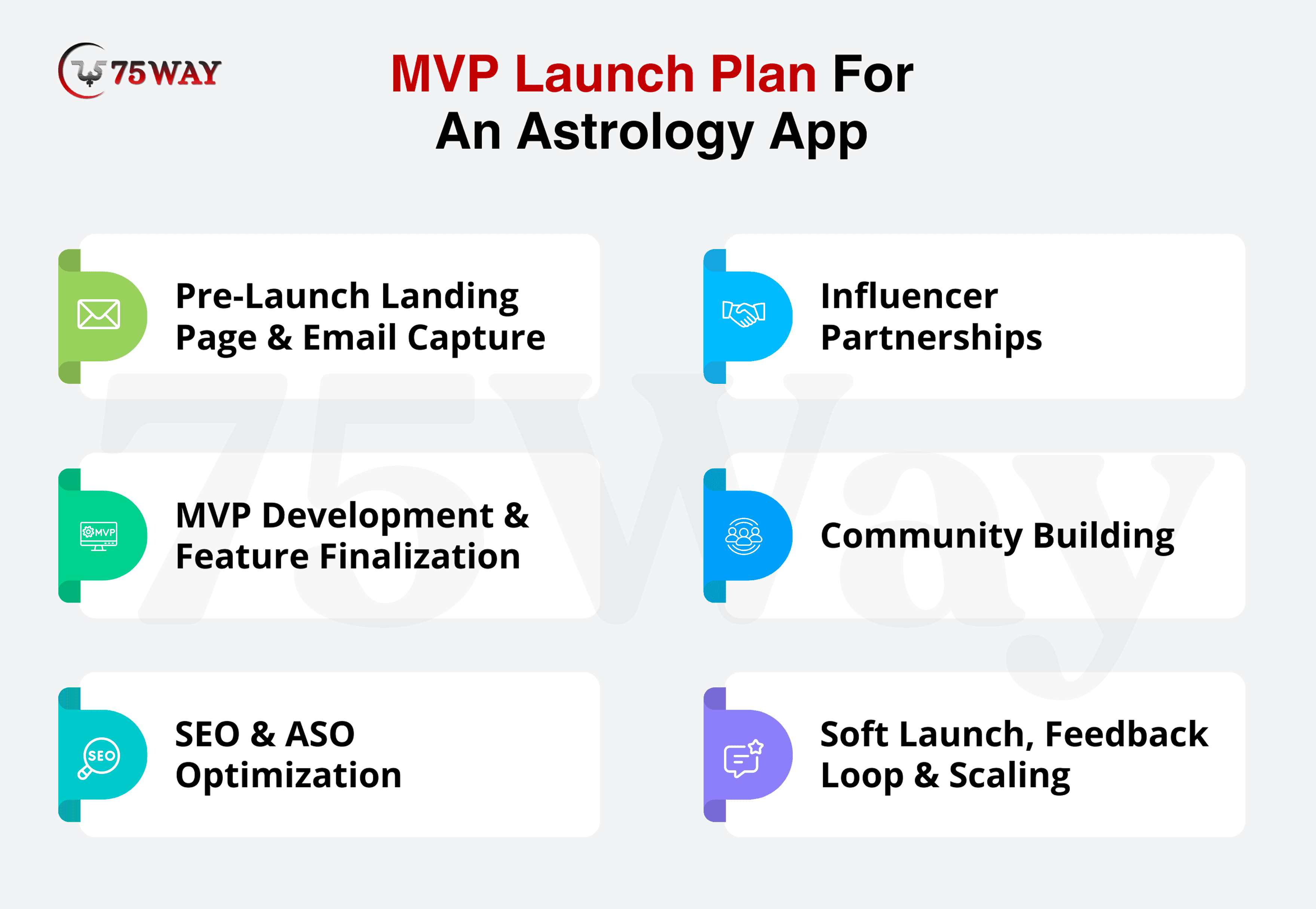
Pre-Launch Landing Page & Email Capture: An early landing page builds participation and interest. You can add email subscriptions that provide a direct connection with users who want early access. Moreover, you must highlight major app features and benefits in a compelling way in your astrology product design to encourage sign-ups and build trust. User engagement at this stage generates a foundation for meaningful feedback after launch.
MVP Development & Feature Finalization: The next stage is to create your MVP for Astra-like astrology apps with core features such as personal profiles, birth details, daily horoscopes, compatibility insights, and notifications. Users experience relevance from the first interaction that is from the basic version. Data collected during MVP usage guides refinement and informs decisions for future enhancements. This approach confirms that the app meets user expectations without overcomplicating the initial release.
SEO & ASO Optimization: Search visibility plays a crucial role in user acquisition while launching your astrology app like Astra. Keyword-focused descriptions, feature-rich listings, and high-quality visuals improve chances of discovery on app stores and search engines. Optimized content increases exposure to the right audience, especially those in the US who look for personalized astrology experiences.
Influencer Partnerships: The next stage is to collaborate with influencers in wellness, spiritual, and astrology communities to build credibility. Trusted voices sharing genuine experiences attract engaged users and create social proof for your astrology app. Early engagment encourages exploration of the app and generates word-of-mouth promotion, increasing adoption without aggressive marketing.
Community Building: Engaged communities on platforms like Reddit, Discord, and TikTok provide spaces for user interaction. Discussions around horoscopes, compatibility results, and daily insights encourage repeated app visits. A sense of belonging enhances retention and creates advocates who share the app naturally within social circles.
Soft Launch, Feedback Loop & Scaling: The final stage is to launch to a smaller audience to observe user interactions and collect feedback. Adjustments to notifications, insights, and personalization strengthen the experience before full public launch. After validation, scaling marketing, influencer activity, and community growth provides wider adoption and ongoing engagement.
Step 8: Post-Launch Growth & Retention
User engagement continues long after the first download, so app maintenance is required after the final launch. AI-powered personalization adapts horoscopes, dream analysis, and compatibility reports to individual patterns. Visual birth charts and interactive features allow users to explore their profiles. Moreover, community forums and discussion spaces enhance interaction, feedback, and sharing to optimize your app. You must analize user behavior regularly to guide feature updates and content improvements. The combination of personalization, social interaction, and actionable astrology transforms one-time downloads into long-term, loyal users.
Quick Snapshot: How to Build an AI-Driven Anonymous Messaging App?
Why Businesses Are Investing in Astrology App Development
Astrology apps combine wellness, technology, and personal insight in ways that resonate with modern users. In the United States, audiences respond strongly to experiences that feel tailored, emotionally meaningful, and integrated into daily routines. Astrology apps attract businesses because demand continues to grow, especially among Millennials and Gen Z, who want daily guidance, self-discovery, and relationship or career insights. Moreover, personalized AI-driven horoscopes and visual birth charts maximize user engagement and retention for astrology apps like Astra. Moreover, multiple revenue streams, including subscriptions, in-app purchases, live consultations, ads, and e-commerce, deliver a return on investment.
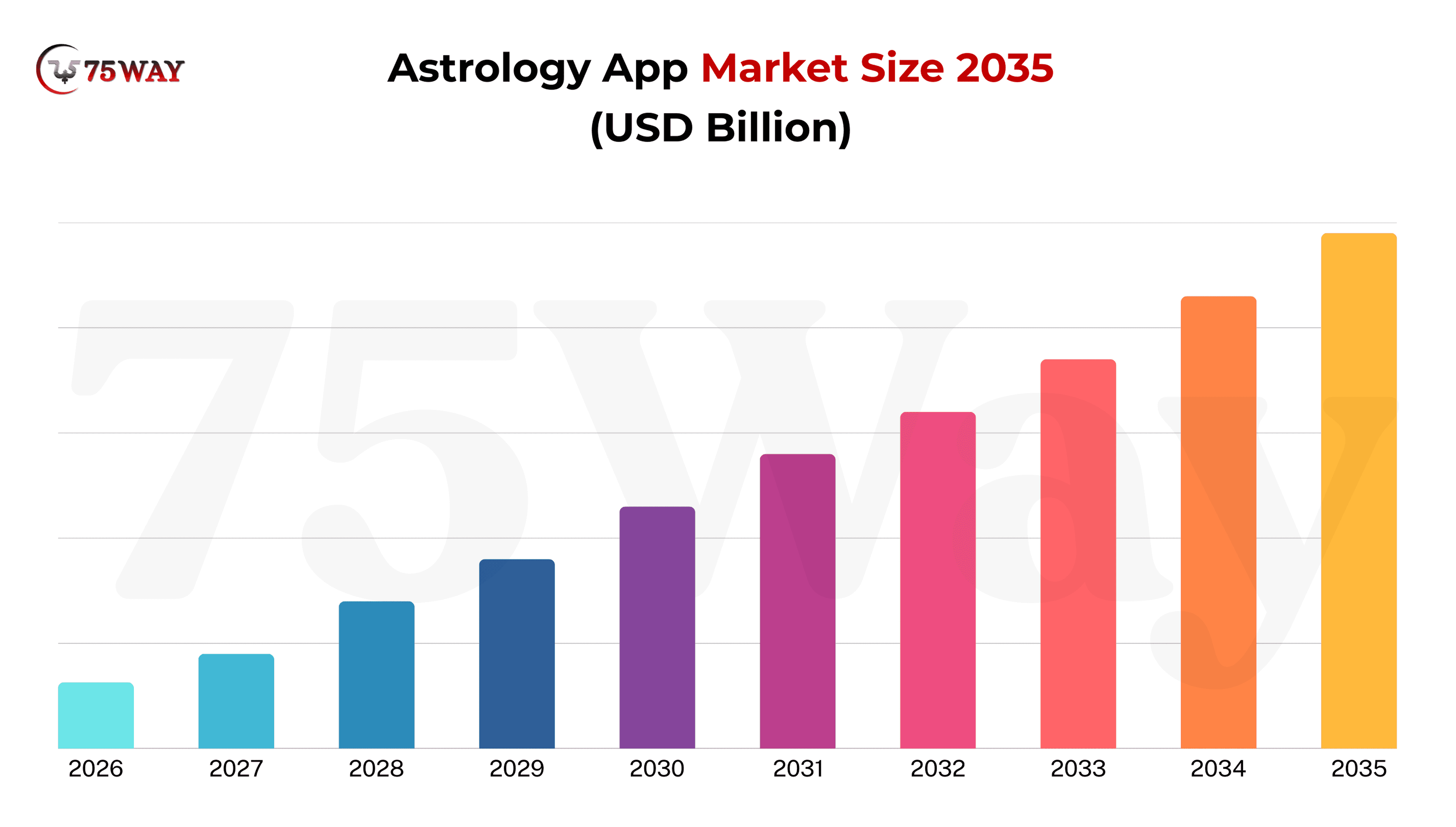
- The worldwide astrology app market is worth around USD 6.27 billion in 2026. It is expected to grow rapidly, reaching nearly USD 49.01 billion by 2035, with a 24.93% compound annual growth rate (CAGR), according to Business Research Insights.
- Nearly 80% of Gen Z questions are relationship-centric, and astrology apps have become their go-to guides for day-to-day life.
- The global astrology app market is projected to grow significantly to nearly USD 20 billion by 2031, according to Statista.
Also Read: Top 10 AI Consulting Companies in 2026
Cost To Develop An Astrology App Similar to Astra
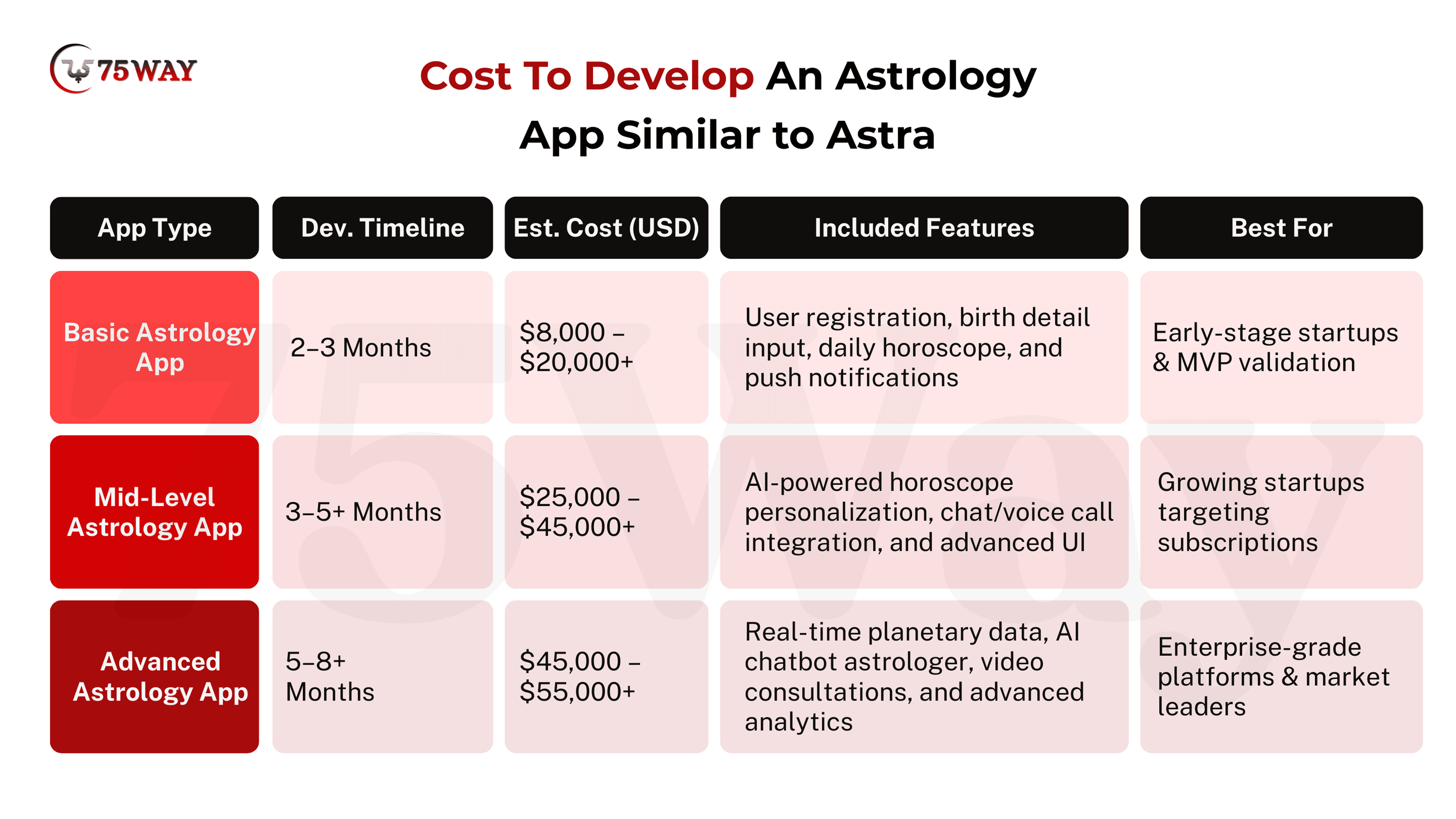
The development costs for an astrology app like Astra depend on the features included, the level of AI integration, and scalability needs. A basic Astra-like astrology app with user registration, birth details, daily horoscopes, and push notifications can be built in 2–3 months for $8,000-$20,000. This option suits early-stage startups or businesses testing an MVP, offering essential functionality while validating market interest.
The cost to create mid-level astrology apps ranges between $25,000 and $45,000 and taking 3–5+ months to develop, add AI-driven horoscope personalization, chat or voice call features, and a more advanced user interface. Moreover, advanced platforms, designed for enterprise-level operations, integrate real-time planetary data, AI chatbot astrologers, video consultations, and analytics. The development timeline for an advanced Astro-like astrology app is 5–8+ months, and the cost ranges from $45,000 to $55,000. Each tier balances investment with expected user engagement and revenue potential.
Several additional factors influence the overall cost of developing an astrology app like Astra. The first one is platform choice, such as iOS, Android app development, or cross-platform, which affects development time and resources. Design complexity, including interactive visuals and birth charts, increases investment. Integration of third-party astrology APIs, payment gateways, and real-time planetary data also increases development requirements. Security, data privacy, and compliance with US regulations are important, as are ongoing maintenance, updates, and server infrastructure to ensure scalability.
Quick Read: How to Build an App Like SpicyChat AI From Scratch
Conclusion
To summarize, a successful astrology app in 2026 depends on more than daily predictions. An end-to-end strategy, AI-driven personalization, trust, and scalable technology together create an experience that users rely on every day. The step-by-step roadmap above guides founders from idea to launch and growth, showing how to turn insights into engagement and revenue. Take the next step today and transform your astrology app idea into a product like Astra that captivates users and scales globally. Hire a reliable astrology app development company for proven expertise, advanced features, and timely delivery.
FAQs
How To Choose Astrology APIs in Horoscope App Development?
The selection of suitable APIs depends on accuracy, reliability, and the type of insights needed while developing an astrology app. APIs that provide birth chart calculations, planetary positions, and compatibility analysis provide personalized experiences. Integration with AI or machine learning tools enhances predictions and user engagement. Cost, scalability, and support from the API provider also matter, especially for apps targeting the US market. You must choose an API carefully that lays the foundation for a smooth, feature-rich astrology app.
Why Integrate AI In Astrology Apps?
Artificial Intelligence brings personalization and interactivity to astrology apps. By analyzing user behavior, birth details, and engagement patterns, AI delivers daily horoscopes, compatibility reports, and dream analysis that feel tailored. Automated chatbots provide instant guidance, while AI-driven recommendations increase retention and daily usage. For businesses, AI improves user satisfaction, opens new monetization channels, and creates habit-forming experiences, making the app more attractive to investors and helping it compete in a growing US market.
How Can Astrology Apps Increase User Retention?
Daily notifications, personalized horoscopes, and interactive features like visual birth charts keep users returning. Community spaces for discussion, compatibility insights, and habit-based rituals encourage repeated engagement. Continuous improvement based on user behavior ensures the app evolves with user needs, creating long-term loyalty and higher daily active users.
How Do AI and LLMs Enhance Astrology Predictions?
AI and LLMs analyze birth data, user behavior, and engagement patterns to deliver precise and personalized predictions. They enable chatbots to answer astrology-related questions instantly and recommend insights tailored to lifestyle and wellness trends. This approach increases user trust, keeps sessions longer, and opens opportunities for monetization through premium features.