AI Summary
Halloween offers US businesses opportunities to create useful seasonal apps. This guide explores Halloween app ideas across party planning, costumes, food, shopping, and entertainment. Discover essential features, estimated Halloween app development costs, and monetization models. Choose an idea that fits your business goals.
Key Takeaways
- Explore Halloween app ideas serving diverse US business needs.
- Discover party planning apps that simplify invitations, bookings, and games.
- Evaluate costume apps offering personalized inspiration, tutorials, and rentals.
- Explore Halloween food apps for recipes, snacks, catering, and planning.
- Compare development costs, essential features, and potential seasonal revenue models
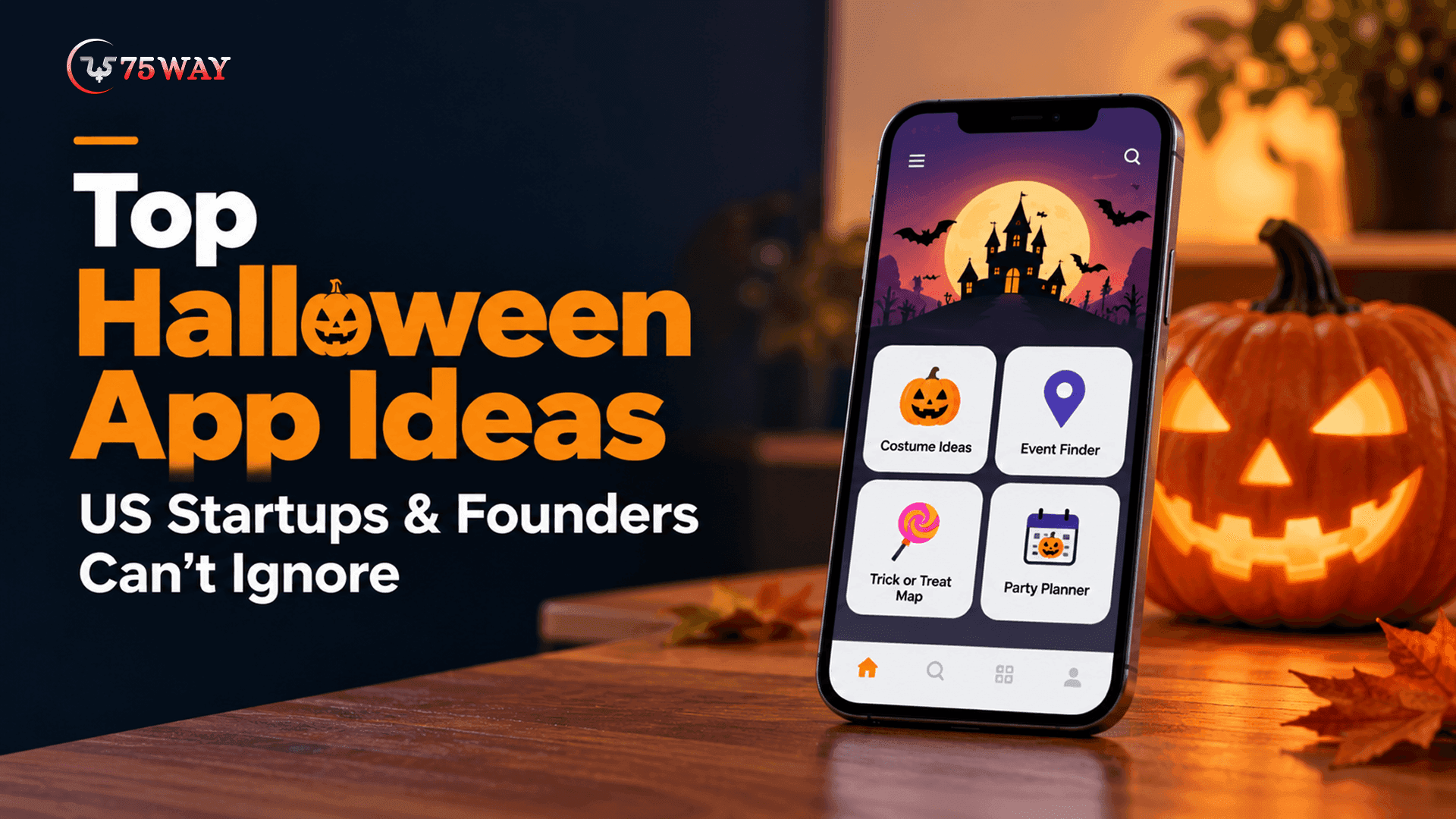
A Halloween can attract attention for a few days, but a well-planned Halloween app can give customers something to interact with before, during, and after the celebration. That could mean finding nearby haunted attractions, creating custom Halloween looks, joining themed challenges, or discovering local parties.
For businesses, the value of Halloween app development solutions comes from choosing an app idea that fits what customers already want during the season. A retailer might focus on shopping experiences, while an entertainment brand could build a horror game or an interactive storytelling app.
The possibilities go well beyond basic countdowns and spooky wallpapers. This guide explores Halloween app ideas US businesses can turn into engaging seasonal products, with opportunities to attract users, support promotions, and generate revenue.
Why Invest In Halloween Apps: US Market Insights And Growth Potential
Halloween creates seasonal business opportunities across retail, entertainment, event planning, and mobile gaming in the US. Consumer spending on costumes, decorations, candy, and experiences gives businesses several ways to connect digital products with holiday demand. The market trends and growth opportunities below explain where Halloween app development may offer commercial potential.
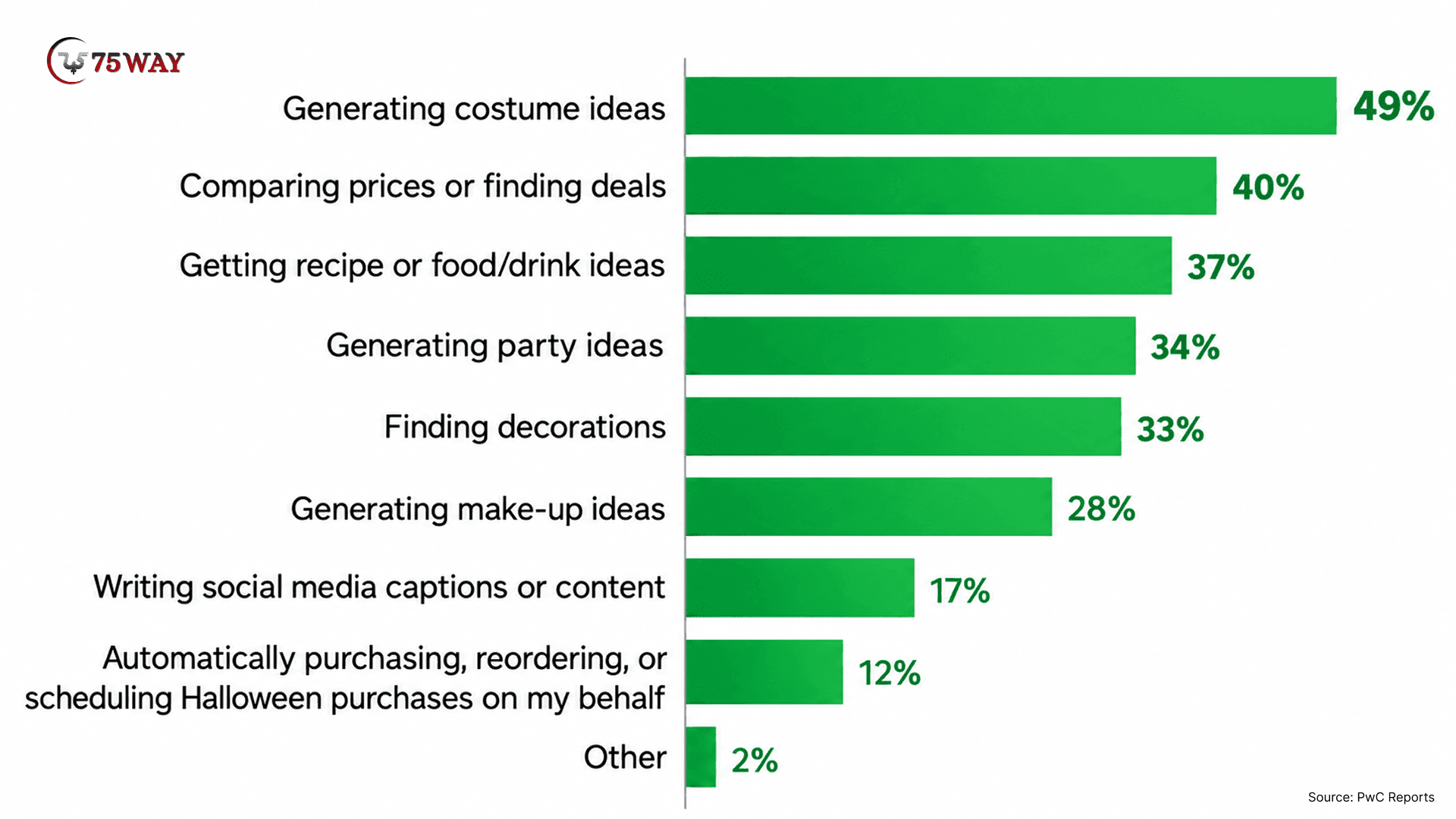
- Consumer spending on Halloween is projected to hit $13.5 billion this year.
- Around 86% of consumers plan to celebrate Halloween this October, up from 78% last year, with the figure climbing to 93% among Gen Z.
- Approximately 19% of Gen Z AI users are using AI beyond product discovery to automate and schedule their Halloween purchases.
- About 31% of consumers planned to begin their Halloween shopping online before September.
Different Kinds Of Ideas For Building Apps For Halloween in USA
A Halloween app can help someone plan a neighborhood candy hunt, create a creepy selfie, find a haunted attraction, or host a themed party. Each experience offers businesses a different way to connect with users who want more from Halloween than decorations and discounts. Here are several Halloween app types worth exploring for your next business idea.
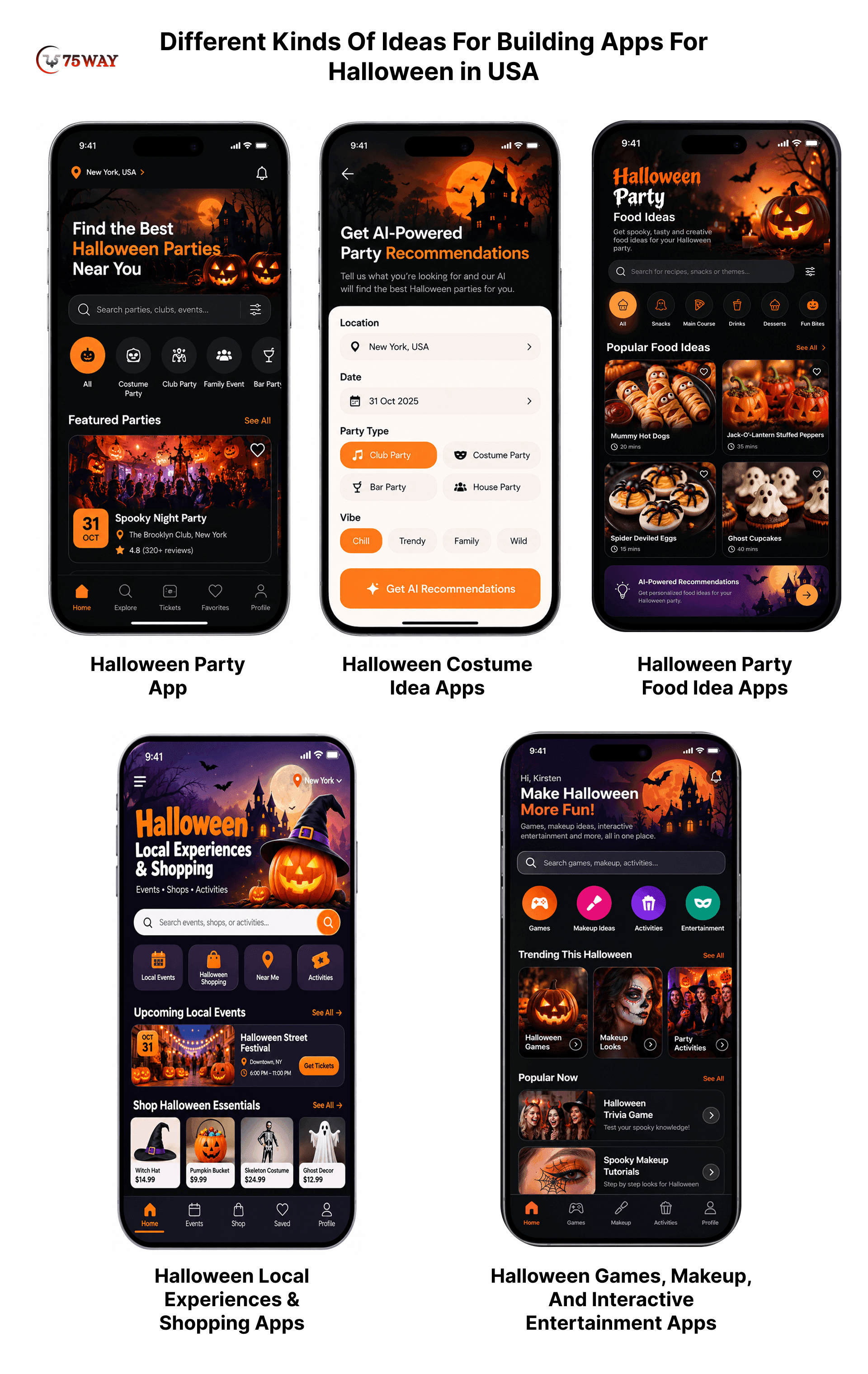
A) Halloween Party App Ideas
Halloween parties involve invitations, guest coordination, entertainment, and last-minute changes. Apps that solve these problems can serve individual hosts, professional event planners, bars, and corporate event teams.
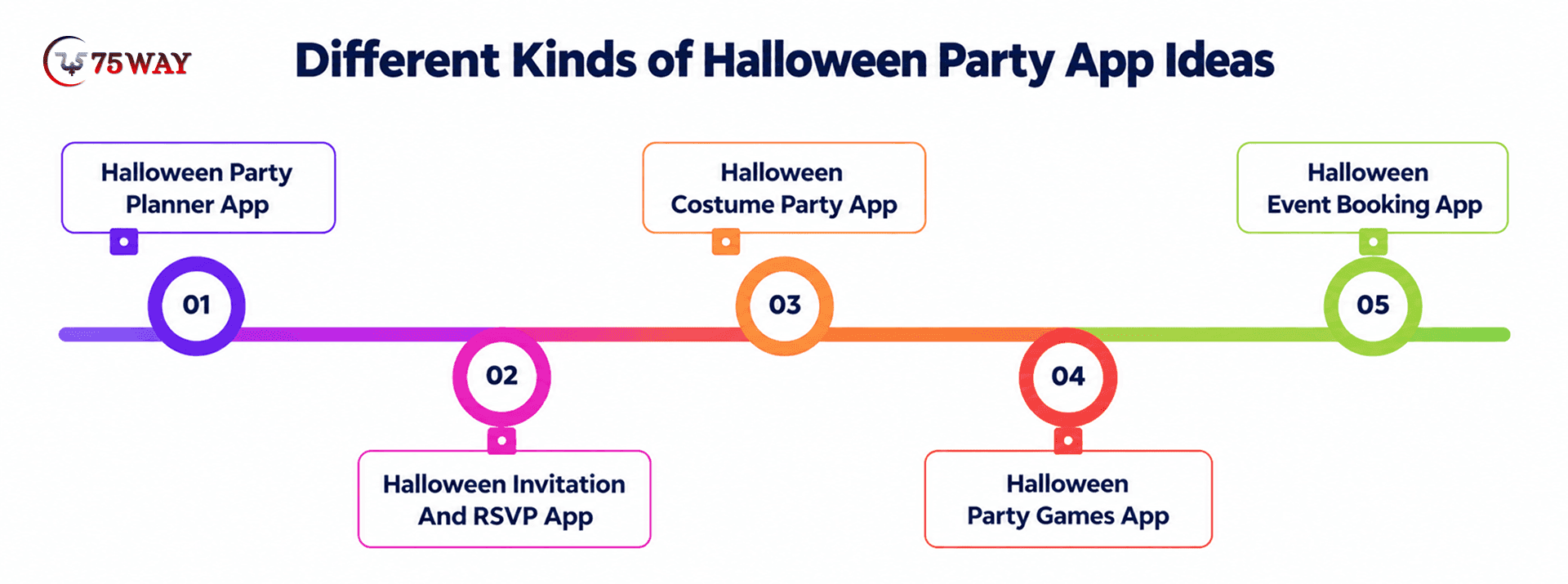
1. Halloween Party Planner App
A Halloween party planner helps hosts organize everything from invitations to decorations in one place. Users could build a checklist, set spending limits, assign tasks, and track RSVPs without juggling multiple apps. A premium version could offer reusable event templates and collaborative planning tools for professional organizers.
Features To Include
- Event Templates: Provide customizable party layouts for home gatherings, corporate celebrations, and neighborhood events.
- Guest Management: Track invitations, RSVPs, dietary preferences, plus-ones, and guest communication from one dashboard.
- Budget Tracker: Organize spending categories, record purchases, and compare planned expenses against actual costs.
- Task Assignment: Delegate shopping, decorations, entertainment, and setup responsibilities to individual collaborators.
- Vendor Directory: Help users discover local caterers, decorators, entertainers, and rental providers.
Best For: Party hosts, event planners, and seasonal event businesses.
Estimated Development Cost
- MVP App: $20,000–$45,000
- Enterprise App: $100,000–$220,000+
2. Halloween Invitation And RSVP App
An invitation app lets hosts create Halloween-themed digital invitations and share them through text, email, or messaging platforms. Guests can respond, check event details, and receive reminders before the party. Monetization could come from premium invitation designs, branded templates, and paid event-management features.
Features To Include
- Design Library: Offer editable invitation templates featuring spooky illustrations, animations, and seasonal typography.
- RSVP Tracking: Record attendance responses, guest counts, and updates as invitations receive replies.
- Smart Reminders: Schedule event reminders and notify guests about time or location changes.
- Guest Messaging: Send event updates, dress codes, parking details, and host announcements directly.
- Premium Designs: Sell exclusive templates, animated invitations, and customizable branded invitation collections.
Best For: Consumer startups, event planners, and invitation design businesses.
Estimated Development Cost
- MVP App: $12,000–$30,000
- Enterprise App: $65,000–$150,000+
3. Halloween Costume Party App
This app helps organizers run costume competitions, themed parties, and Halloween networking events. Guests can submit costume photos, enter categories, and vote for winners. Businesses could charge organizers per event or offer premium competition tools for larger celebrations.
Features To Include
- Contest Categories: Create separate competitions for group costumes, funniest outfits, horror characters, and original designs.
- Photo Submissions: Let participants upload costume photos with captions and category selections.
- Voting System: Let eligible attendees vote while limiting duplicate submissions.
- Live Leaderboard: Display current standings and reveal winners when organizers close voting.
- Event Tickets: Sell entry passes and connect registrations with costume competition participation.
Best For: Event companies, bars, and Halloween party venues.
Estimated Development Cost
- MVP App: $18,000–$40,000
- Enterprise App: $90,000–$200,000+
4. Halloween Party Games App
A party games app turns a gathering into an interactive experience through trivia, themed challenges, guessing games, and team competitions. Hosts can choose games based on group size and age. A business version could offer branded game packs for bars, family entertainment centers, and corporate events.
Features To Include
- Game Library: Include original trivia, guessing games, scavenger hunts, and group challenges for different ages.
- Team Plays: Let hosts create teams, assign players, and manage multiplayer game rounds.
- Score Tracking: Automatically calculate points, record completed challenges, and display final rankings.
- Custom Questions: Allow organizers to create branded quizzes and personalized party challenges.
- Offline Mode: Keep selected games playable when event venues have limited internet connectivity.
Best For: Family venues, corporate teams, and party entertainment businesses.
Estimated Development Cost
- MVP App: $15,000–$35,000
- Enterprise App: $80,000–$180,000+
5. Halloween Event Booking App
A booking platform connects customers with Halloween parties, themed dinners, costume contests, and ticketed attractions. Organizers can publish event listings, set ticket prices, and manage attendance. Revenue can come from booking commissions, organizer subscriptions, and paid promotional placements.
Features To Include
- Event Discovery: Help users find Halloween events using location, date, price, and category filters.
- Ticket Booking: Support ticket selection, secure checkout, confirmations, and digital entry passes.
- Organizer Dashboard: Let hosts publish events, monitor sales, and manage attendee information.
- Entry Validation: Verify digital tickets using QR codes at event entrances.
- Sales Analytics: Track ticket revenue, attendance, cancellations, and promotional campaign performance.
Best For: Ticketing startups, event organizers, and local entertainment businesses.
Estimated Development Cost
- MVP App: $25,000–$55,000
- Enterprise App: $130,000–$300,000+
B) Best Halloween Costume Ideas Apps
Costume discovery apps can serve shoppers who need inspiration, families coordinating outfits, and retailers selling seasonal clothing or accessories. Their commercial value increases when users can move from discovering a costume to finding the products needed to create it.
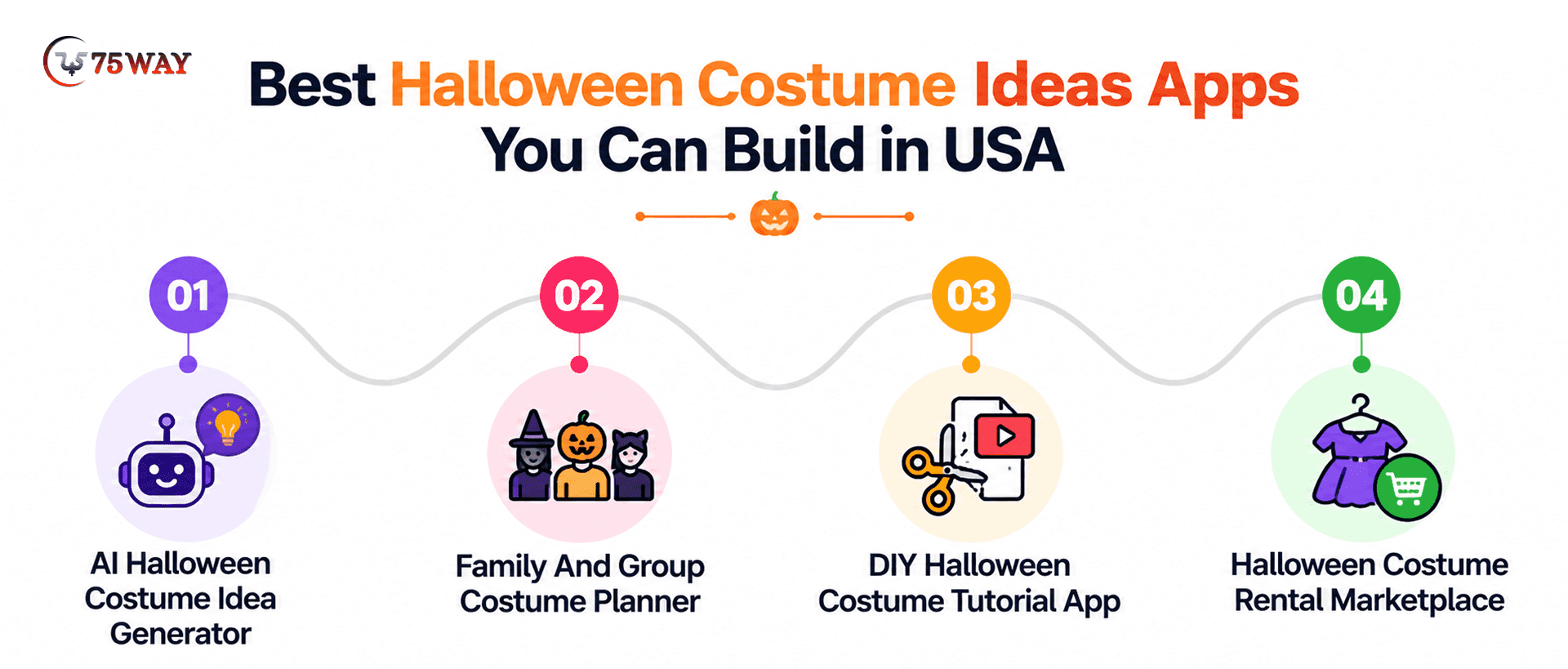
6. AI Halloween Costume Idea Generator
An AI costume generator recommends outfit concepts based on users' interests, budgets, available clothing, and preferred themes. Instead of returning generic suggestions, it could explain how to assemble each look using accessible materials. Retail integrations could help users purchase missing accessories through affiliate links or direct product listings.
Features To Include
- Style Quiz: Collect preferences for themes, budgets, comfort, and individual or group costumes.
- AI Recommendations: Generate costume concepts with practical instructions and relevant personalization.
- Budget Planner: Estimate outfit expenses using selected materials, accessories, and shopping preferences.
- Shopping Links: Connect recommendations with relevant products through retailer feeds or affiliate integrations.
- Saved Looks: Let users bookmark costume ideas, compare options, and revisit shopping lists.
Best For: Fashion retailers, affiliate businesses, and consumer startups.
Estimated Development Cost
- MVP App: $25,000–$55,000
- Enterprise App: $120,000–$280,000+
7. Family And Group Costume Planner
Coordinating matching costumes can become difficult when family members have different preferences, sizes, and budgets. This app helps groups choose a shared theme, assign characters, and coordinate purchases. Retailers could use it to promote matching costume collections and group discounts.
Features To Include
- Theme Matching: Suggest coordinated characters and costume concepts for families, friends, and larger groups.
- Character Assignment: Allocate unique roles to participants while avoiding duplicate selections.
- Size Collection: Record clothing sizes and fit preferences to support group shopping decisions.
- Shared Shopping: Combine costume components into one collaborative shopping list for all participants.
- Purchase Tracking: Mark items as ordered, purchased, borrowed, or still needed.
Best For: Family retailers, costume shops, and group-shopping startups.
Estimated Development Cost
- MVP App: $15,000–$35,000
- Enterprise App: $75,000–$170,000+
8. DIY Halloween Costume Tutorial App
A DIY costume app teaches users how to create outfits using everyday clothing, craft supplies, and affordable accessories. Tutorials can include step-by-step instructions, material lists, and difficulty ratings. Revenue opportunities include premium tutorials, craft-store partnerships, and sponsored product recommendations.
Features To Include
- Video Tutorials: Demonstrate costume assembly through short, organized instructional videos.
- Material Lists: Display required supplies, estimated quantities, and suggested alternatives for each project.
- Skill Filters: Sort projects by difficulty, age suitability, available time, and crafting experience.
- Progress Tracking: Let users save tutorials and mark individual construction steps as completed.
- Supply Shopping: Connect material lists with craft retailers and relevant product purchasing options.
Best For: Craft businesses, DIY creators, and educational content startups.
Estimated Development Cost
- MVP App: $18,000–$40,000
- Enterprise App: $90,000–$200,000+
9. Halloween Costume Rental Marketplace
A costume rental marketplace connects customers with costume shops, independent sellers, and rental businesses. Users can browse outfits, compare rental terms, check availability, and reserve costumes for specific dates. A multi-vendor model can generate revenue through commissions, seller subscriptions, and optional delivery services.
Features To Include
- Costume Catalog: Display rental outfits with photos, sizes, condition details, and pricing.
- Availability Calendar: Prevent conflicting reservations by tracking rental dates and return deadlines.
- Vendor Profiles: Give rental businesses storefronts, service details, policies, and customer reviews.
- Secure Payments: Process reservations, deposits, refunds, and eligible cancellation charges through payment integrations.
- Return Tracking: Manage pickup, shipping, return reminders, and rental completion status.
Best For: Costume retailers, rental companies, and marketplace founders.
Estimated Development Cost
- MVP App: $30,000–$65,000
- Enterprise App: $150,000–$350,000+
C) Apps For Halloween Party Food Ideas
Halloween food apps can help home cooks, caterers, restaurants, and party hosts plan themed menus. The best concepts pair recipe inspiration with practical details like ingredient quantities, prep time, dietary requirements, shopping lists, and catering orders.
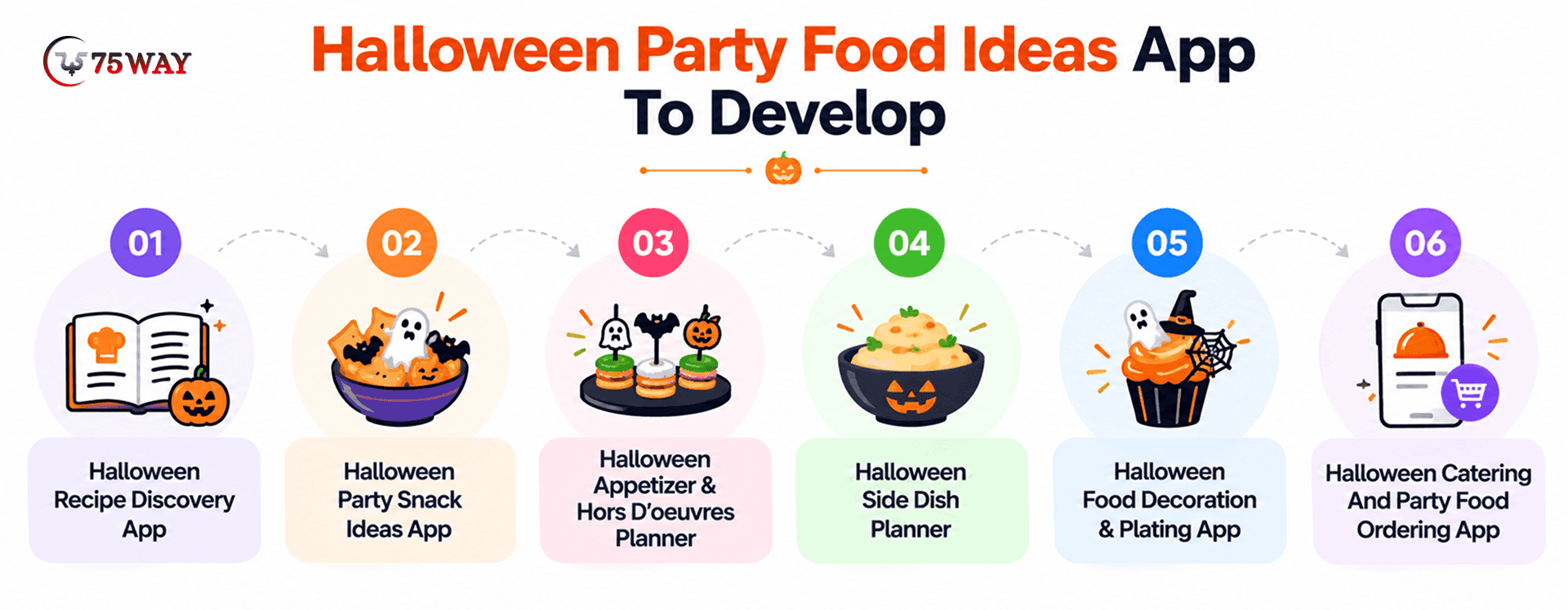
10. Halloween Recipe Discovery App
A Halloween recipe app organizes seasonal meals, desserts, and themed dishes into searchable collections. Users can filter recipes by preparation time, ingredients, dietary preferences, and cooking skill. A premium version could offer meal plans, exclusive recipes, and sponsored placements from food brands.
Features To Include
- Recipe Collections: Organize Halloween recipes by course, preparation time, difficulty, and seasonal theme.
- Ingredient Filters: Find dishes using available ingredients, dietary preferences, and common pantry items.
- Cooking Instructions: Provide clear steps, ingredient quantities, and estimated cooking times.
- Meal Planning: Build Halloween menus and organize recipes into a party-prep schedule.
- Shopping Lists: Combine ingredients across selected recipes into one editable grocery list.
Best For: Food publishers, recipe startups, and grocery retailers.
Estimated Development Cost
- MVP App: $18,000–$40,000
- Enterprise App: $90,000–$210,000+
11. Halloween Party Snack Ideas App
This app focuses on bite-sized Halloween treats that hosts can prepare for guests without spending hours in the kitchen. Users can explore themed snack ideas, compare preparation times, and assemble a party menu. Grocery partnerships and premium recipe collections provide potential monetization opportunities.
Features To Include
- Snack Gallery: Showcase themed finger foods, sweet treats, savory bites, and easy party snacks.
- Time Filters: Find recipes by prep time and available cooking time.
- Serving Calculator: Adjust ingredient quantities according to expected guest counts and serving sizes.
- Dietary Filters: Identify vegetarian, vegan, gluten-free, and other relevant dietary options.
- Menu Builder: Combine selected snacks into a party menu with organized preparation tasks.
Best For: Food bloggers, grocery brands, and home cooking startups.
Estimated Development Cost
- MVP App: $15,000–$32,000
- Enterprise App: $75,000–$170,000+
12. Halloween Appetizer & Hors D'oeuvres Planner
This concept targets hosts who want an organized selection of Halloween appetizers and hors d'oeuvres for cocktail parties, office events, or catered celebrations. It helps users balance hot and cold dishes, calculate quantities, and coordinate preparation. Catering companies could use a business edition to collect orders and manage event menus.
Features To Include
- Menu Pairing: Recommend complementary appetizers based on flavors, serving styles, and event preferences.
- Portion Calculator: Estimate quantities using guest counts, event duration, and planned meal formats.
- Preparation Schedule: Organize advance preparation, cooking, plating, and serving tasks by time.
- Menu Sharing: Export selected dishes and preparation details for hosts, caterers, and kitchen teams.
- Catering Requests: Collect event dates, guest counts, dietary needs, and customer contact details.
Best For: Caterers, private chefs, and corporate event planners.
Estimated Development Cost
- MVP App: $18,000–$40,000
- Enterprise App: $90,000–$220,000+
13. Halloween Side Dish Planner
A side dish planner helps hosts build a complete Halloween dinner instead of relying only on desserts and snacks. It recommends complementary vegetables, potatoes, salads, and themed accompaniments based on the main course. Personalized menus and grocery integrations can make it useful beyond a single seasonal occasion.
Features To Include
- Dish Recommendations: Suggest suitable sides based on the main course and preferred serving style.
- Dietary Matching: Filter options according to dietary requirements and individual ingredient restrictions.
- Serving Estimates: Calculate ingredient quantities for different household sizes and gatherings.
- Recipe Scaling: Adjust measurements and preparation instructions when users change serving counts.
- Meal Coordination: Organize side dishes alongside main courses, desserts, and preparation schedules.
Best For: Meal-planning startups, recipe publishers, and grocery retailers.
Estimated Development Cost
- MVP App: $12,000–$28,000
- Enterprise App: $65,000–$150,000+
14. Halloween Food Decoration & Plating App
This app focuses on visual presentation, helping users transform ordinary dishes into Halloween-themed food displays. It could provide decorating tutorials, plating references, and techniques using accessible ingredients. Restaurants and food creators could also use it to develop seasonal presentation ideas for social media and special menus.
Features To Include
- Plating Gallery: Display Halloween food presentation examples organized by dish type and difficulty.
- Decoration Tutorials: Explain visual techniques using accessible ingredients, utensils, and decorating materials.
- Visual References: Allow users to save presentation examples for later cooking and plating.
- Technique Filters: Sort tutorials by preparation time, equipment requirements, and skill level.
- Creator Profiles: Enable approved food creators to publish tutorials and build audience engagement.
Best For: Restaurants, food creators, and culinary content businesses.
Estimated Development Cost
- MVP App: $18,000–$38,000
- Enterprise App: $85,000–$190,000+
15. Halloween Catering And Party Food Ordering App
This platform lets customers order Halloween-themed platters, desserts, appetizers, and complete party menus from local food businesses. Customers can specify guest counts, delivery windows, dietary requirements, and event details. Businesses can manage seasonal menus and bulk orders through a dedicated merchant dashboard.
Features To Include
- Menu Catalog: Showcase seasonal platters, desserts, appetizers, package prices, and serving estimates.
- Order Scheduling: Allow customers to select delivery dates, time windows, and quantities.
- Vendor Management: Enable food businesses to update menus, accept orders, and manage availability.
- Order Tracking: Display preparation status, delivery progress, and important customer notifications.
- Bulk Ordering: Support large event orders with custom quantities and approved pricing arrangements.
Best For: Restaurants, catering companies, and local food marketplaces.
Estimated Development Cost
- MVP App: $30,000–$65,000
- Enterprise App: $160,000–$350,000+
D) Halloween Local Experiences And Shopping App Ideas
These ideas target businesses that depend on local discovery, seasonal inventory, bookings, and customer purchases. Their biggest advantage is connecting Halloween inspiration with a nearby service or transaction.
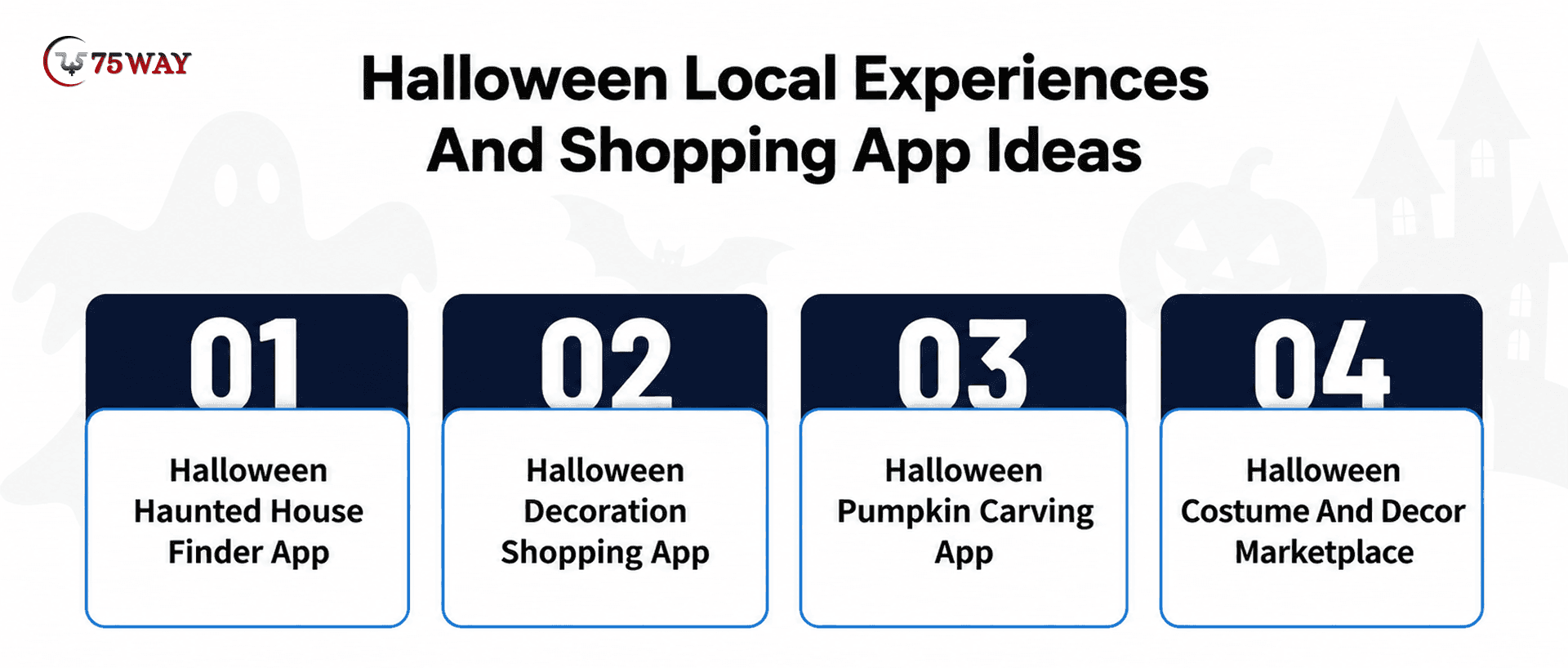
16. Halloween Haunted House Finder App
A haunted house finder helps users discover haunted attractions, horror experiences, and seasonal entertainment nearby. Listings can include attraction descriptions, age guidance, operating dates, ticket prices, and directions. Operators could pay for premium listings or use the platform to sell tickets.
Features To Include
- Local Search: Find attractions using location, operating dates, ticket prices, and experience categories.
- Attraction Profiles: Display descriptions, visitor information, age recommendations, and practical access details.
- Ticket Integration: Connect attraction listings with supported booking and payment systems.
- Route Planning: Help visitors navigate between selected attractions and nearby destinations.
- Review Management: Collect visitor feedback and moderate inappropriate or misleading submissions.
Best For: Tourism startups, attraction operators, and local entertainment businesses.
Estimated Development Cost
- MVP App: $25,000–$50,000
- Enterprise App: $120,000–$280,000+
17. Halloween Decoration Shopping App
A decoration shopping app helps homeowners, event planners, and businesses discover seasonal decorations for indoor and outdoor spaces. Users can browse product collections, compare prices, and save items for particular rooms or events. Retailers could integrate inventory, personalized recommendations, and promotional campaigns.
Features To Include
- Product Catalog: Organize collections for indoor, outdoor, lighting, props, and party decorations.
- Advanced Filters: Narrow products by price, dimensions, material, style, and intended placement.
- Visual Collections: Let users create themed decoration boards for rooms, storefronts, and events.
- Inventory Sync: Display current product availability through supported retailer inventory integrations.
- Checkout Integration: Connect product selections to secure purchasing and order confirmation workflows.
Best For: Home retailers, decor brands, and e-commerce startups.
Estimated Development Cost
- MVP App: $25,000–$55,000
- Enterprise App: $130,000–$300,000+
18. Halloween Pumpkin Carving App
A pumpkin carving app gives users patterns, instructions, and creative ideas for different skill levels. Beginners can follow simple templates, while experienced carvers can explore more detailed designs. A premium version could offer downloadable patterns, sponsored craft supplies, and seasonal design collections.
Features To Include
- Pattern Library: Offer pumpkin carving templates categorized by difficulty, theme, and design style.
- Step Instructions: Explain carving sequences with clear illustrations and safety-conscious guidance.
- Design Preview: Help users visualize selected patterns before choosing a pumpkin.
- Custom Uploads: Allow users to import suitable images and prepare them as carving templates.
- Pattern Downloads: Provide printable templates and premium design collections for supported devices.
Best For: Craft retailers, family apps, and creative content startups.
Estimated Development Cost
- MVP App: $15,000–$32,000
- Enterprise App: $75,000–$170,000+
19. Halloween Costume And Decor Marketplace
A marketplace can connect independent costume sellers, prop makers, decorators, and seasonal retailers with customers preparing for Halloween. Sellers can list products, manage orders, and handle customer questions, while shoppers compare options across vendors. Revenue may come from transaction commissions, subscriptions, and sponsored listings.
Features To Include
- Seller Onboarding: Register vendors, collect business information, and configure marketplace selling permissions.
- Product Listings: Support product images, pricing, stock levels, variants, and detailed descriptions.
- Marketplace Payments: Integrate payment processing, commission calculations, refunds, and eligible seller payouts.
- Order Management: Track order fulfillment, shipping information, cancellations, and customer communication.
- Seller Analytics: Report product views, order volumes, sales revenue, and listing performance.
Best For: Retail startups, independent sellers, and seasonal marketplaces.
Estimated Development Cost
- MVP App: $35,000–$75,000
- Enterprise App: $180,000–$400,000+
E) Halloween Games, Makeup, And Interactive Entertainment Apps
Interactive Halloween apps can encourage repeat usage through games, creative tools, and shared experiences. You can choose concepts based on your target audience and technical capabilities, rather than adding complex features just to make an app seem innovative.
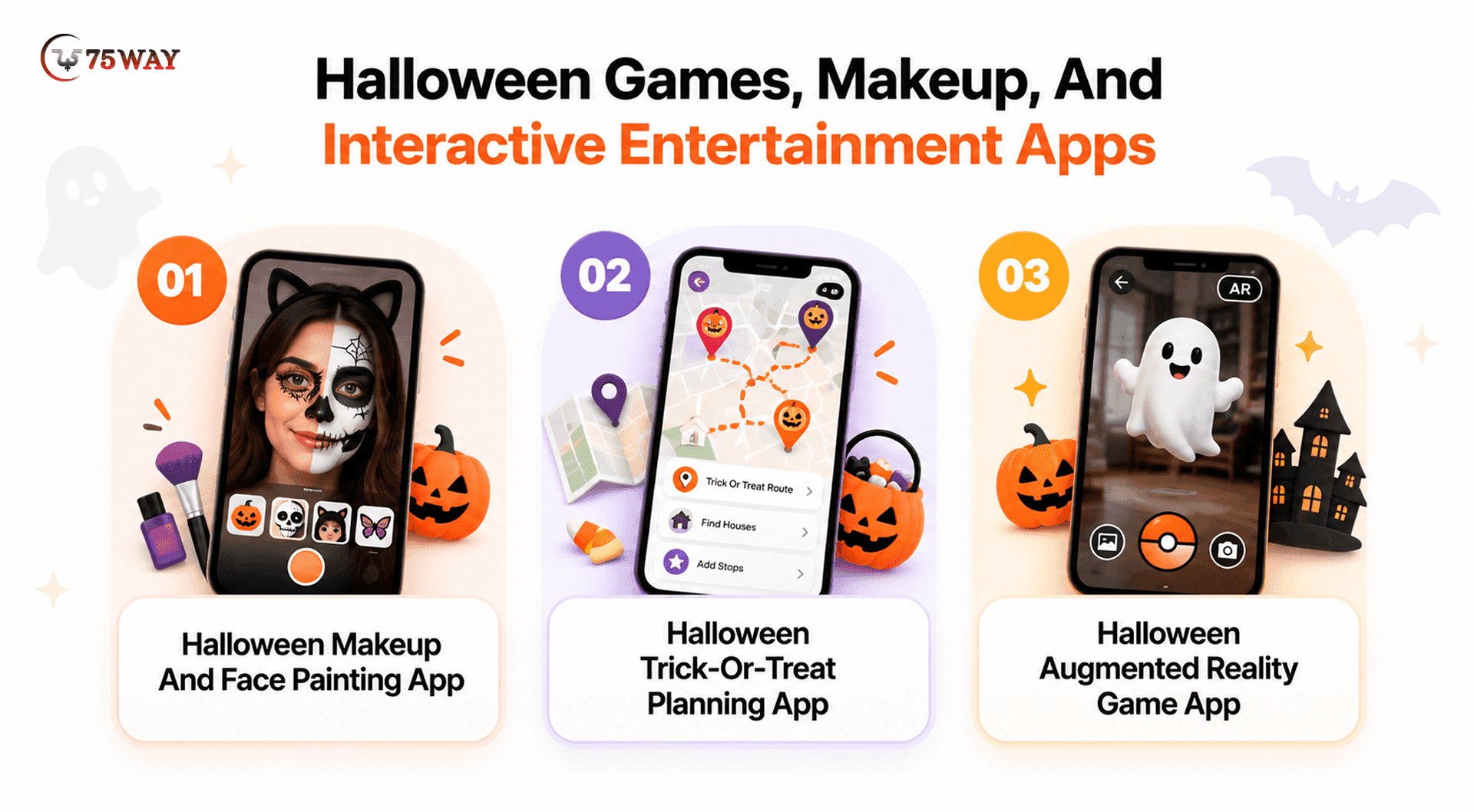
20. Halloween Makeup And Face Painting App
A makeup app helps users discover Halloween looks ranging from simple face painting to elaborate horror-inspired designs. Tutorials can guide users through product selection, application steps, and estimated completion times. Beauty brands could monetize the experience through product recommendations, sponsored tutorials, and creator partnerships.
Features To Include
- Look Gallery: Organize makeup inspiration by character, complexity, color palette, and occasion.
- Step Tutorials: Provide sequential instructions with images or videos for each makeup technique.
- Product Suggestions: Recommend suitable makeup products based on the selected look and budget.
- Virtual Preview: Use supported facial tracking to preview selected makeup effects before application.
- Creator Content: Allow approved makeup artists to publish tutorials and promote relevant services.
Best For: Beauty brands, makeup creators, and consumer app startups.
Estimated Development Cost
- MVP App: $20,000–$45,000
- Enterprise App: $110,000–$250,000+
21. Halloween Trick-Or-Treat Planning App
A trick-or-treat planning app helps families organize routes, identify participating neighborhoods, and coordinate their evening schedules. Useful features could include shared family plans, location-based information, and optional check-ins. Because the app may serve children, the product design should make privacy, location permissions, and parental controls central.
Features To Include
- Route Planning: Map selected destinations and help families plan practical walking routes.
- Community Listings: Show participating homes or local events using verified, opt-in submissions.
- Family Coordination: Share plans and arrival updates with authorized family members.
- Parent Controls: Let guardians manage permissions, visibility, and location-sharing preferences.
- Local Alerts: Deliver relevant event updates and route information without unnecessary personal data collection.
Best For: Family startups, neighborhood platforms, and local community businesses.
Estimated Development Cost
- MVP App: $25,000–$55,000
- Enterprise App: $120,000–$280,000+
22. Halloween Augmented Reality Game App
An augmented reality (AR) game transforms a physical environment into an interactive Halloween experience. Players might discover virtual objects, complete themed challenges, or unlock rewards at participating venues. Businesses can use location-based campaigns and sponsored challenges to connect digital entertainment with real-world visits.
Features To Include
- AR Experiences: Place interactive virtual objects within supported real-world camera views.
- Challenge System: Create timed missions, collectible objectives, and Halloween-themed gameplay progression.
- Reward Engine: Issue digital badges, achievement rewards, and eligible promotional offers.
- Location Triggers: Activate approved experiences at participating venues using permission-based location functionality.
- Campaign Dashboard: Let business partners configure challenges and measure participation across sponsored experiences.
Best For: Entertainment studios, retail brands, and location-based experience businesses.
Estimated Development Cost
- MVP App: $35,000–$80,000
- Enterprise App: $200,000–$450,000+
Features To Prioritize In An AI-Powered Halloween Mobile App Development
An AI-powered Halloween app needs more than spooky visuals to keep users interested once the novelty wears off. Personalized costume suggestions, AI-generated horror stories, interactive filters, and smart event recommendations can give users reasons to explore and return. The features worth prioritizing depend on your app concept, so the list below focuses on capabilities that can make the experience more engaging and useful.
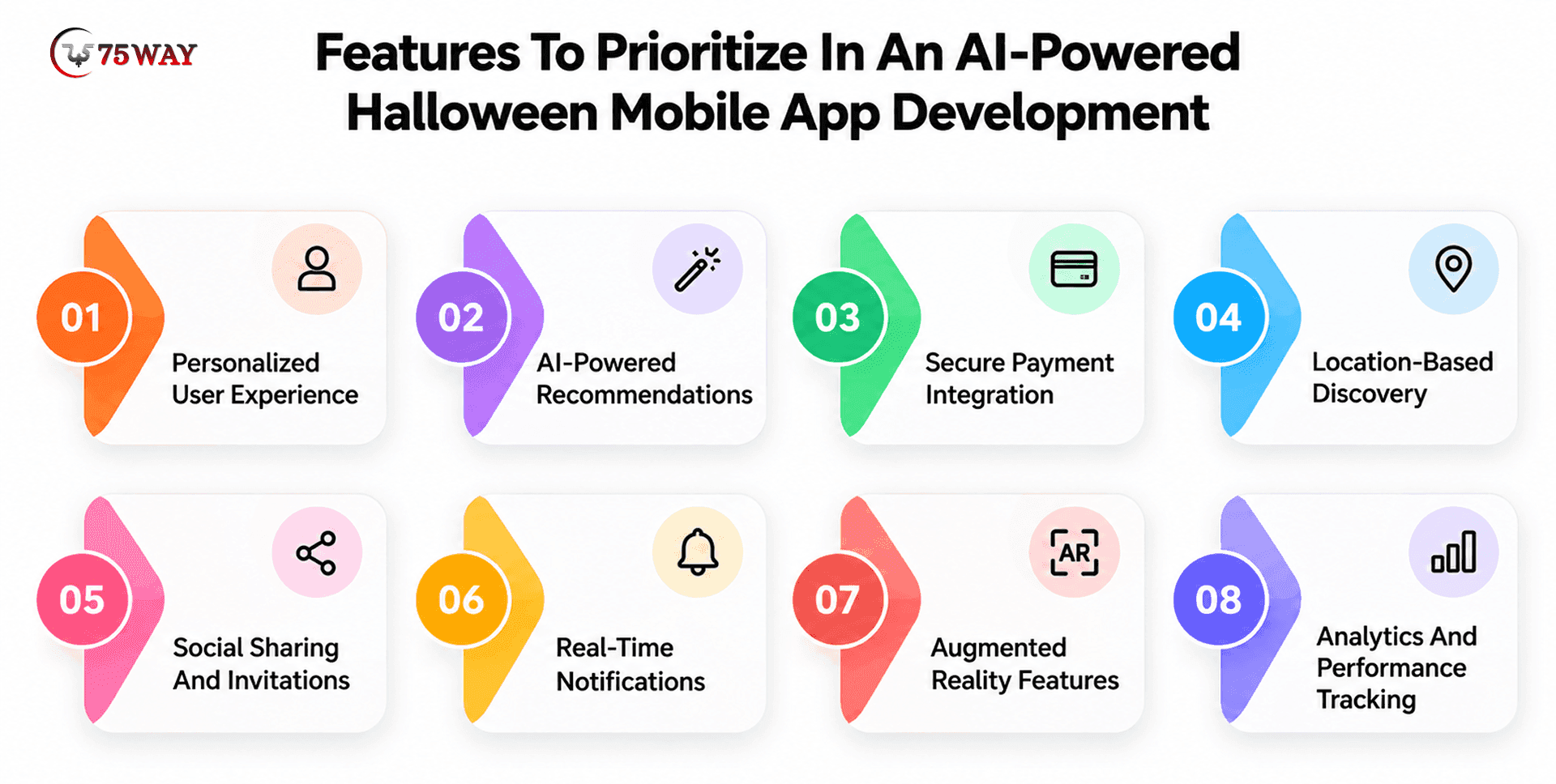
1. Personalized User Experience
Let users customize their Halloween app experience based on their interests, age group, budget, and preferred activities. Personalized recommendations for costumes, parties, decorations, and games can make the app more relevant to each user.
2. AI-Powered Recommendations
Use AI to suggest costume ideas, themed recipes, party activities, and decorations based on individual preferences. Smart recommendations help users find suitable options faster and create a more engaging experience.
3. Secure Payment Integration
Enable users to pay for event tickets, costume rentals, decorations, and food orders through trusted payment gateways. Clear pricing, secure checkout, and instant payment confirmations can build customer confidence and reduce abandoned purchases.
4. Location-Based Discovery
Help users find nearby Halloween parties, haunted attractions, costume stores, and seasonal events using location-based search. Filters for distance, ticket prices, dates, and event types can make local discovery more convenient.
5. Social Sharing And Invitations
Allow users to share costume ideas, digital invitations, party details, and Halloween photos with friends and family. Social sharing can increase organic visibility while encouraging more people to explore and use the app.
6. Real-Time Notifications
Send timely alerts about upcoming events, ticket confirmations, order updates, special offers, and booking reminders. Let users customize notification preferences, so they receive useful updates without feeling overwhelmed by unnecessary messages.
7. Augmented Reality Features
Introduce AR experiences that let users preview makeup looks, visualize decorations, or interact with virtual Halloween characters. These interactive features can make the app more memorable and encourage users to spend more time exploring its offerings.
8. Analytics And Performance Tracking
Give business owners access to dashboards showing bookings, purchases, user engagement, and campaign performance. These insights can help businesses understand customer behavior, improve promotions, and make better decisions for future Halloween seasons.
Who Should Explore Halloween App Development?
The strongest opportunities depend on your existing business, audience, and revenue model.
- Startup Founders: Build niche consumer apps around costume discovery, party planning, or Halloween entertainment.
- Event Management Companies: Simplify registrations, ticketing, guest lists, and venue coordination.
- Retailers and E-Commerce Brands: Turn seasonal product discovery into personalized shopping experiences.
- Restaurants and Food Businesses: Promote themed menus, party platters, recipes, and catering orders.
- Entertainment Companies: Develop interactive games, augmented reality experiences, and haunted attraction platforms.
- Software Entrepreneurs: Create subscription-based tools or multi-vendor marketplaces serving seasonal businesses.
How To Turn Halloween App Ideas into Reality: Development Process
A successful Halloween app starts with a clear concept and a realistic plan for bringing it to life. Decisions about features, design, AI integrations, testing, and launch all affect the user experience and development budget. The steps explain how to approach the process without losing sight of your app’s purpose or business goals.
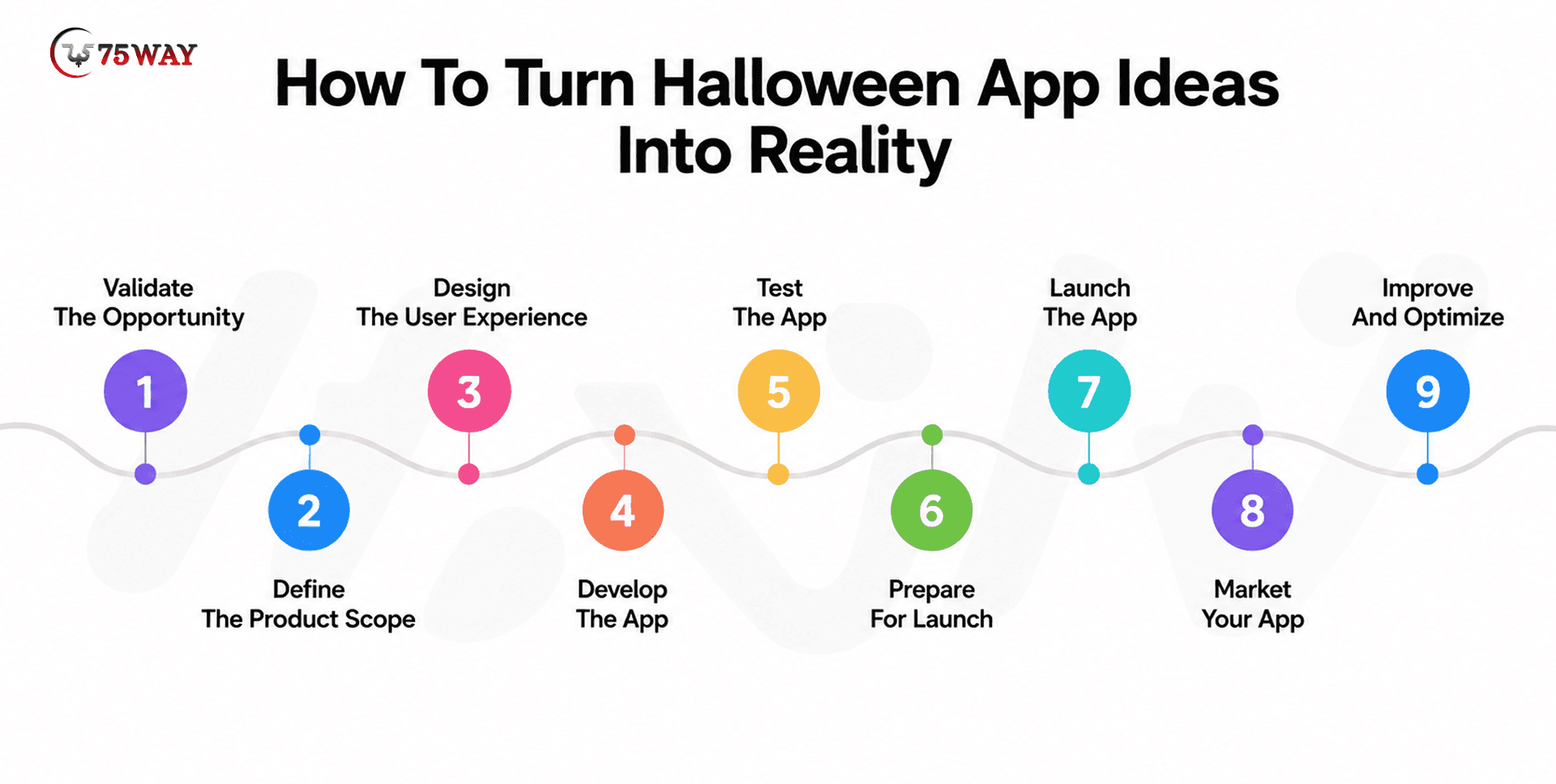
Step 1: Validate The Opportunity
Identify your target audience, their pain points, existing alternatives, and willingness to pay. Research competitors and test your Halloween app idea through customer interviews, landing pages, or clickable prototypes before investing in development.
Step 2: Define The Product Scope
Outline essential features, user journeys, and business objectives to establish a clear product direction. Prioritize MVP functionality, identify third-party integrations, and document requirements to prevent unnecessary development costs.
Step 3: Design The User Experience
Create wireframes and interactive prototypes to map how users will navigate the app. Develop an engaging Halloween-themed interface with intuitive navigation, accessible layouts, and smooth interactions across supported devices.
Step 4: Develop The Halloween App
Build the frontend, backend, database, administrative dashboard, and required integrations according to the approved scope. Develop core features first, then add advanced capabilities such as AI recommendations, payment processing, or augmented reality when needed.
Step 5: Test And Prepare For Launch
Test essential workflows, security, performance, accessibility, payment processing, and device compatibility before release. Resolve identified issues, prepare app store listings, and confirm that customer support and analytics systems are ready.
Step 6: Launch, Market, And Improve
Release the app early enough to attract users before Halloween demand peaks in October. Track downloads, conversions, engagement, and feedback, then refine features and marketing campaigns based on actual user behavior.
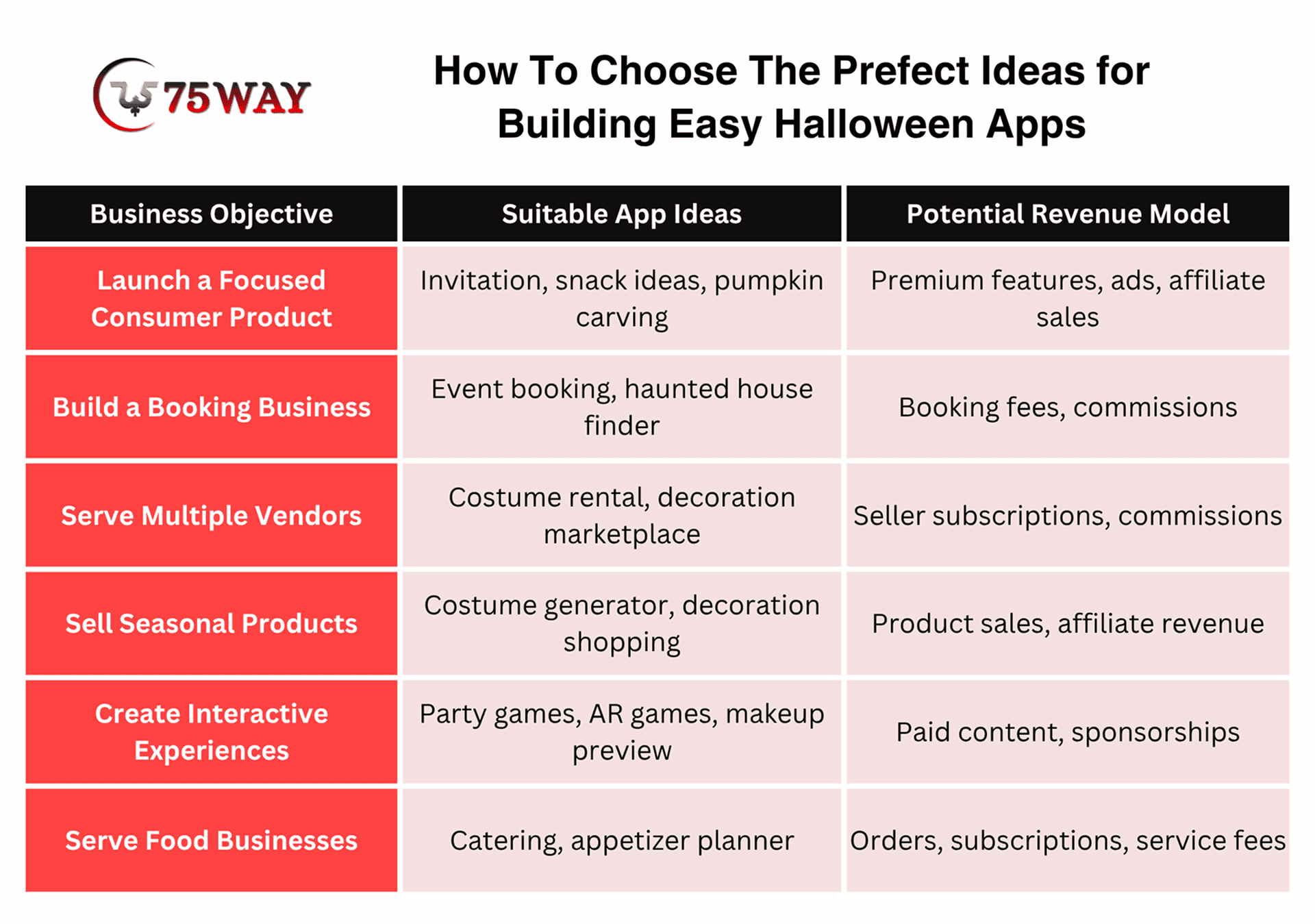
How To Choose the Perfect Ideas for Building Easy Halloween Apps
Not every concept needs a complex platform or a large initial investment. The best starting point is an idea that solves a clear customer problem, reaches an identifiable audience, and offers a realistic route to revenue.
Final Thoughts
The best Halloween app ideas combine a clear customer need with a viable business model and a manageable development scope. From party planning and costume discovery to food ordering, local attractions, and AR entertainment, each concept offers a different route to market.
Before investing, validate demand, assess competitors, estimate development costs, and define the smallest useful version of your product. A well-scoped MVP gives your business a practical way to test demand before expanding features or entering additional markets.
To explore your Halloween app idea, get a custom app development estimate, define your MVP requirements, and identify the features your business needs for a successful launch.
Frequently Asked Questions (FAQs)
What Are The Best Halloween App Ideas For Startups?
Halloween party planners, costume generators, recipe apps, event booking platforms, and costume rental marketplaces are promising concepts. The right choice depends on audience demand, competition, monetization potential, and your ability to reach customers before the season begins.
How Much Does It Cost To Develop A Halloween App?
A Halloween app MVP may cost $12,000–$80,000+, while an enterprise application may cost $65,000–$450,000+. Actual pricing depends on features, platforms, integrations, security requirements, and the development team's rates.
Can Businesses Launch A Halloween App In Time For October?
Yes, if the scope and launch schedule are realistic. Simpler apps may take 6–10 weeks, while complex marketplaces or AR products can require several months. Store reviews, testing, and marketing preparation need additional planning.
How Can Halloween Apps Make Money?
Apps can generate revenue through subscriptions, transaction commissions, affiliate sales, sponsored listings, digital purchases, and business plans. The model should reflect the user's primary activity and be tested against customer acquisition costs and seasonal demand.
Should A Halloween App Include AI Features?
AI is useful when it solves a genuine user problem, such as generating costume concepts, personalizing recipes, or recommending activities. A rules-based recommendation system may be sufficient for an MVP if AI adds unnecessary cost or complexity.
How Can Businesses Reduce Halloween App Development Costs?
Start with one audience and one primary workflow, reuse proven components, limit integrations, and postpone advanced features until demand is validated. A focused MVP can help establish product-market fit before larger investments.
Can A Halloween App Generate Revenue After October?
Yes. Businesses can expand into other seasonal events, year-round party planning, costume rentals, everyday recipes, or general event booking. The most suitable expansion depends on whether the core audience has needs beyond Halloween.